The Challenges Facing Girls in Grassroots Football in Nigeria

Opeyemi OyekunleNov 12, 2026 | 9 min read | 176 views
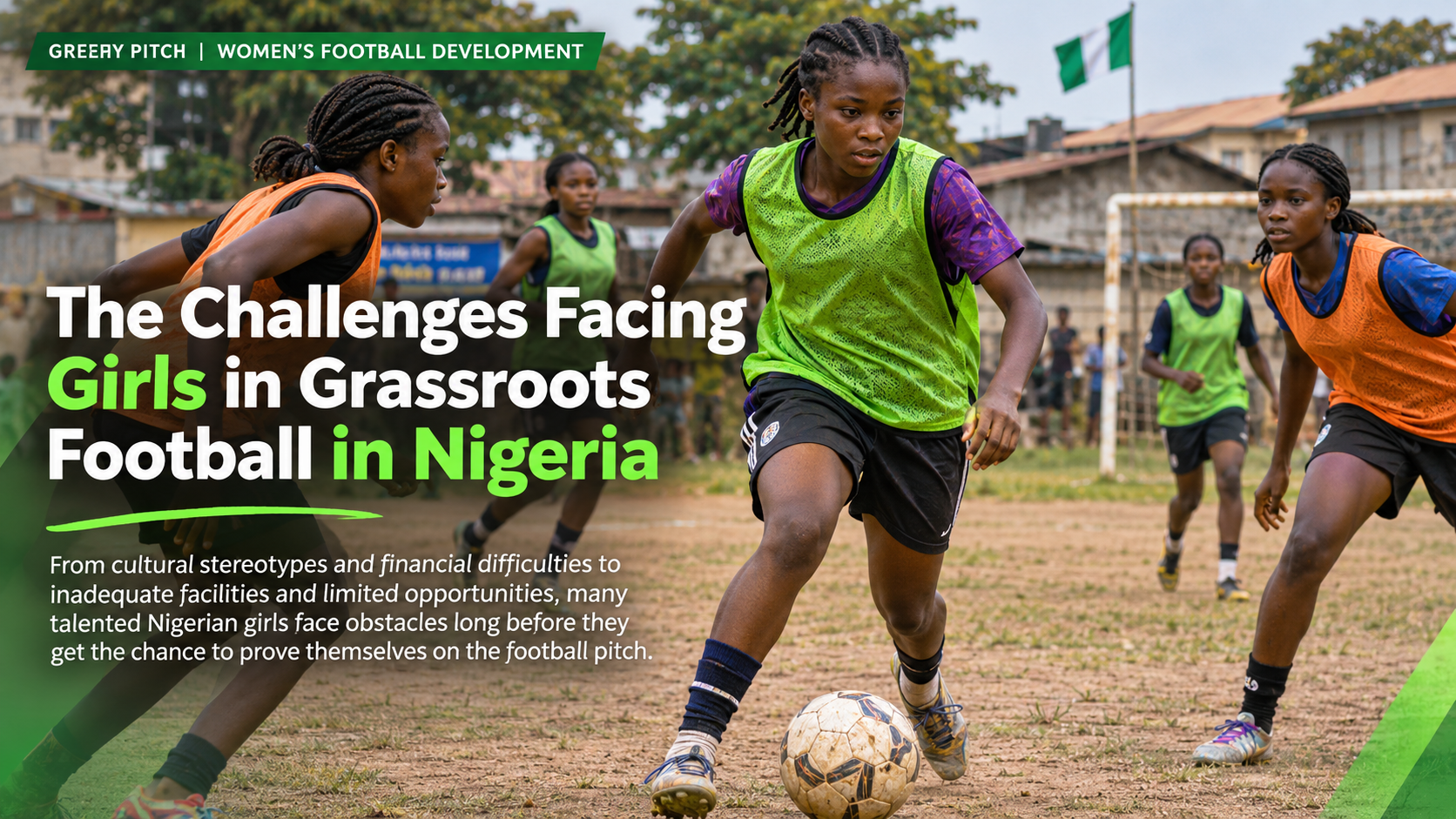
Nigeria has a proud history in women's football. The Super Falcons have established themselves as one of Africa's most successful national teams, while players such as Asisat Oshoala have demonstrated that Nigerian women can compete at the highest levels of international football.
Yet, beneath these achievements lies an important question: How many talented Nigerian girls never get the opportunity to develop their football abilities?
If Nigeria wants to build a stronger future for women's football, the challenges facing girls at the grassroots level must receive greater attention.
1. Cultural stereotypes and societal expectations
One of the most persistent challenges facing girls in grassroots football is the belief that football is primarily a male sport.
In some Nigerian communities, a boy who spends hours playing football is considered passionate and ambitious. However, a girl displaying the same enthusiasm may face criticism or discouragement. She might be told that football is too physically demanding for girls or that she should concentrate on activities traditionally associated with females. These attitudes can influence how families, schools, and communities respond to girls who want to participate in sports.
For some girls, the challenge begins at home. Parents who willingly support their sons' football ambitions may hesitate when their daughters express similar interests. Their concerns may include safety, academic performance, cultural expectations, or uncertainty about career opportunities in women's football.
While parental concerns should not automatically be dismissed, discouraging girls simply because of their gender limits their opportunities.
Football ability is not determined by whether a child is male or female. Every child deserves an opportunity to discover and develop their potential.
2. Limited access to football academies and training opportunities
Football academies have become increasingly popular in Nigeria, particularly in major cities such as Lagos, Abuja, Delta and Port Harcourt. However, access to organised football training remains uneven.
Some academies are established primarily for boys, while others lack the personnel, facilities, or resources needed to accommodate girls.
Imagine two children living in the same community, both passionate about football.
The boy may have several local teams to choose from, while the girl struggles to find even one structured programme.
The boy can participate in regular training sessions and weekend competitions. The girl may be restricted to occasional informal matches. Over time, these differences can create significant gaps in technical development, match experience, and confidence.
Talent requires consistent practice, appropriate coaching, and competitive opportunities. Without these resources, even a naturally gifted player may struggle to reach her potential. Girls should not have to travel across several communities or pay unusually high fees simply to access basic football training.
Grassroots football development must include more accessible programmes that deliberately welcome and support female players.
3. Financial difficulties and inadequate sponsorship
Young players need boots, training kits, transportation, adequate nutrition, medical support, and access to suitable training environments. For families experiencing financial difficulties, these expenses can become major obstacles.
The situation may be particularly challenging for girls whose families are already uncertain about the value of investing in women's football. A parent might be willing to spend money supporting a son's football development but consider the same investment unnecessary for a daughter.
Meanwhile, grassroots female football teams may struggle to secure sponsorship, equipment donations, and financial support. Without adequate funding, academies may find it difficult to recruit qualified coaches, maintain facilities, organise competitions, or support players from disadvantaged backgrounds.
The problem is not necessarily that businesses are unwilling to support women's football, some may simply be unaware of the opportunities or uncertain about the benefits of sponsorship.
Supporting girls' football should not be viewed merely as charity, it can be a meaningful investment in the development of young people and communities.
4. Inadequate facilities and concerns about safety
Young players need safe training environments, access to clean drinking water, suitable toilets, basic first-aid arrangements, and responsible supervision. Unfortunately, some grassroots football environments operate without adequate facilities.
For girls, the absence of private changing areas and appropriate sanitation can create additional barriers.
Safety is another important consideration.
Parents may hesitate to allow their daughters to attend football training if facilities are far from home, transportation is unreliable, or adequate supervision is unavailable.
There must also be clear safeguards against bullying, harassment, abuse, and exploitation.
Football academies should establish clear child-protection policies, properly screen staff, provide accessible reporting procedures, and ensure that concerns are investigated responsibly.
A young girl's desire to become a footballer should never require her to compromise her safety or dignity.
5. Limited competitions and scouting opportunities
Training is essential, but competitions provide opportunities for young footballers to test their abilities, learn from opponents, and gain valuable experience.
In many communities, boys have greater access to informal leagues, neighbourhood tournaments, and academy competitions. Girls, on the other hand, may struggle to find regular, age-appropriate competitions. A talented player who trains throughout the year but rarely participates in competitive matches may find it difficult to develop certain aspects of her game.
Competitions provide opportunities for scouts, coaches, and football clubs to identify promising players. When girls are excluded from organised competitions, their chances of being discovered may also decrease.
Schools, local football associations, and private tournament organisers should work towards establishing consistent competitions for girls across different age categories. Such competitions should prioritise player development, appropriate safeguarding, and fair participation rather than exposing young athletes to unnecessary pressure.
6. Menstrual health and the lack of appropriate support
Menstruation is a normal part of life, yet it can become an additional challenge for girls participating in grassroots football when proper facilities and support are unavailable.
Some young female footballers may experience menstrual discomfort, lack access to sanitary products, or struggle to find private toilets and changing facilities during training. Others may feel uncomfortable discussing menstrual concerns with coaches, particularly when they fear embarrassment or negative reactions. These difficulties can lead to missed training sessions or reduced participation.
The solution is not to discourage girls from playing football.
Instead, academies and schools should provide suitable sanitation facilities, access to menstrual health information, supportive coaching environments, and reasonable adjustments when players need them.
Female coaches and appropriate support staff can also provide valuable guidance.
No girl should feel ashamed of a normal biological process or believe that menstruation automatically disqualifies her from participating in football.
7. The shortage of female coaches and mentors
For girls entering football, having access to female coaches and mentors can be particularly valuable. A female coach who understands the challenges young players face can provide practical guidance, encouragement, and an example of what is possible within the sport.
However, there remains a need to develop more qualified female coaches and mentors within Nigeria's grassroots football system. This does not mean male coaches cannot successfully train female footballers. Many can and do contribute positively to women's football.
Rather, football development programmes should provide more opportunities for women to participate in coaching, administration, refereeing, and other leadership positions.
Nigeria needs more women who can inspire the next generation of footballers, not only by scoring goals but also by leading teams, managing academies, officiating matches, and developing young talents.
8. Balancing education, family responsibilities, and football
For many young Nigerian girls, pursuing football requires balancing several responsibilities. School attendance, homework, household duties, and family expectations can compete with training schedules. A girl who finishes school in the afternoon may be expected to return home immediately to help with domestic activities, while her brother has more freedom to attend football training. These differences in available time can affect participation and development.
Parents may also worry that football will interfere with their daughters' education. Such concerns are understandable, especially given the uncertainty of professional football careers.
However, education and football should not be treated as mutually exclusive.
Football academies can support academic progress by organising reasonable training schedules, encouraging school attendance, and working with parents to monitor players' wellbeing. Schools can also make sports more accessible through structured extracurricular programmes.
The goal should not be to push every young female footballer towards a professional career. It should be to provide opportunities for girls to develop sporting abilities while maintaining the education and skills needed for life beyond football.
9. Unclear pathways to professional football
One question many parents ask before supporting their daughter's football ambition is simple: What happens after she finishes playing for the academy?
For young players, the journey from community football to a professional club can be difficult to understand. Some may not know how to access reputable football academies, participate in recognised competitions, or attract the attention of legitimate scouts, others may encounter individuals who make unrealistic promises about foreign contracts or professional opportunities. This uncertainty can discourage families from investing time and resources in football development.
Nigeria needs clearer development pathways connecting grassroots football with established clubs, educational opportunities, and legitimate talent-identification programmes.
Though, there have been encouraging initiatives.
On 10 December 2025, the Nigeria Football Federation inaugurated the FIFA Talent Development Scheme for Girls in Abuja, with an emphasis on talent identification and development.
Such initiatives are important, but their long-term impact will depend on how widely they reach young footballers and whether they provide meaningful opportunities beyond initial selection.
Grassroots football development should not end with identifying talented girls, it should provide structures that help them progress.
10. Limited media coverage and recognition
When young players see footballers they admire receiving recognition, they can begin to imagine similar opportunities for themselves. Unfortunately, grassroots female football often receives less attention than men's football.
A boys' academy tournament may attract spectators and local media coverage, while an equally competitive girls' tournament struggles to receive publicity. This difference can affect sponsorship opportunities, the visibility of players, and public interest.
Media platforms, sports journalists, and digital football communities have important roles to play in changing this situation. Stories about female footballers should not appear only when the Super Falcons participate in major international competitions.
The journey of a young girl training in a community academy in Abeokuta, Ilorin, or Makurdi can be just as meaningful to grassroots football development. By sharing these stories, football platforms can help highlight emerging talents, celebrate positive achievements, and draw attention to programmes deserving of support.
How Greeny Pitch can contribute
At Greeny Pitch, promoting grassroots football development means recognising the importance of opportunities for both boys and girls.
Football is full of stories waiting to be told, and many talented girls are among those whose journeys deserve greater visibility.
Digital platforms can contribute by highlighting female footballers, showcasing academies that support girls, publishing educational content, and sharing information about credible football development opportunities.
Through player profiles, academy directories, articles, and football development initiatives, Greeny Pitch can help connect football stakeholders and improve awareness of opportunities within the grassroots community.
There is also an opportunity to encourage more girls' participation in talent-identification programmes and community football competitions.
The objective should not simply be to increase the number of female players registered on football platforms, it should be to encourage an environment where talented girls receive genuine support and opportunities to develop.